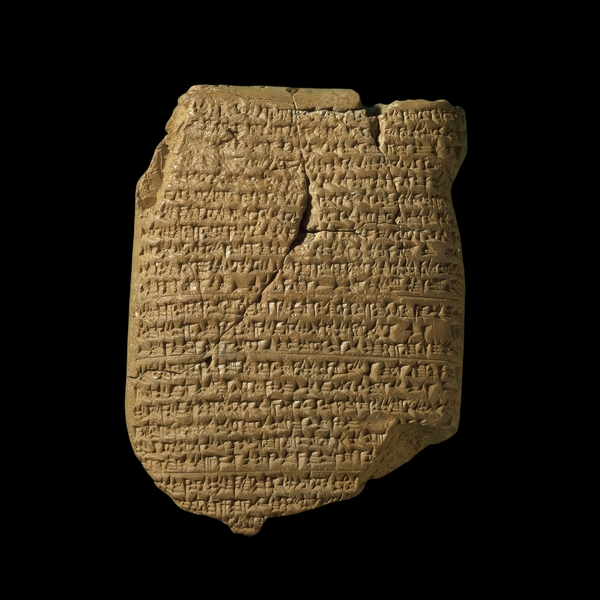
Photo of one of the Babylonian Chronicles on display in the British Museum
The Babylonian Chronicles make it possible to assign the fall of Jerusalem to the Second of Adar (March 16) in 597 B.C. with complete accuracy, confirming the Biblical accounts of Babylonian attacks on Jerusalem in 597 and 586 B.C.
The Babylonian Chronicles are series of tablets recording major events in Babylonian history
Neo-Babylonian, about 550-400 BC
From Babylon, southern Iraq
The Babylonian Chronicle records:
"In the seventh month (of Nebuchadnezzar-599 BC.) in the month Chislev (Nov/Dec) the king of Babylon assembled his army, and after he had invaded the land of Hatti (Syria/Palestine) he laid seige to the city of Judah. On the second day of the month of Adara ( 16th of March) he conquered the city and took the king (Jehoiachin) prisoner. He installed in his place a king (Zedekiah) of his own choice, and after he had received rich tribute, he sent (them) forth to Babylon."
When comparing this text from ancient Babylon with the record of the Babylonian invasion in the Book of II Kings 24:7-17 they demonstrate very clearly the accuracy of the Biblical text.
www.britishmuseum.org/explore/highlights/highlight_objects/me/c/cuneiform_nebuchadnezzar_ii.aspx